Mangos del palo en el panteón (Mangoes from the tree in the cemetery)
Medium:
My Father always tells me about a memory he has from his childhood in El Salvador. When he was a teenager him and his friends would walk into the cemetery next to my grandpa’s house. He would climb the towering mango tree and pick green mangoes for him and his friends. He always jokes that the dead work to fertilize the tree and make the green mangoes taste even more delicious. The thought of my immigrant father having a joyful childhood memory brings me joy. I always thought that my family saying “they don’t taste like the ones from home” whenever we ate our favorite Salvadran foods was because they were imported from other countries. In fact, it’s the memories that our food holds from a silly friend ritual of eating green mangoes in the cemetery to the last meal you shared with your family before leaving your home country.
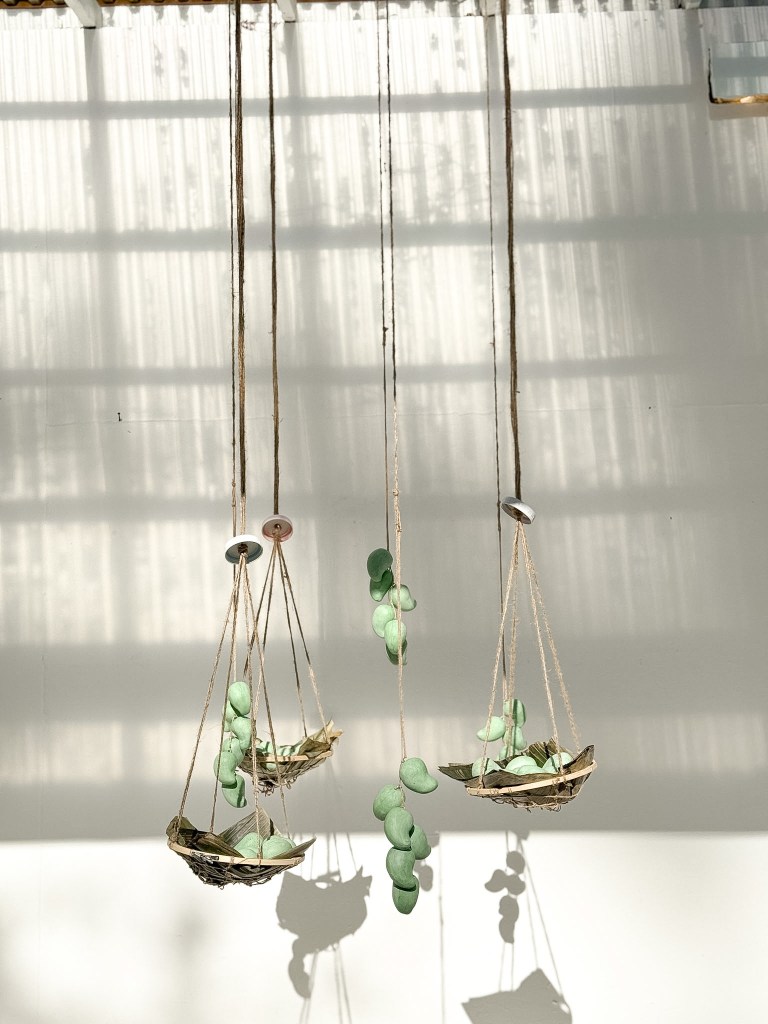
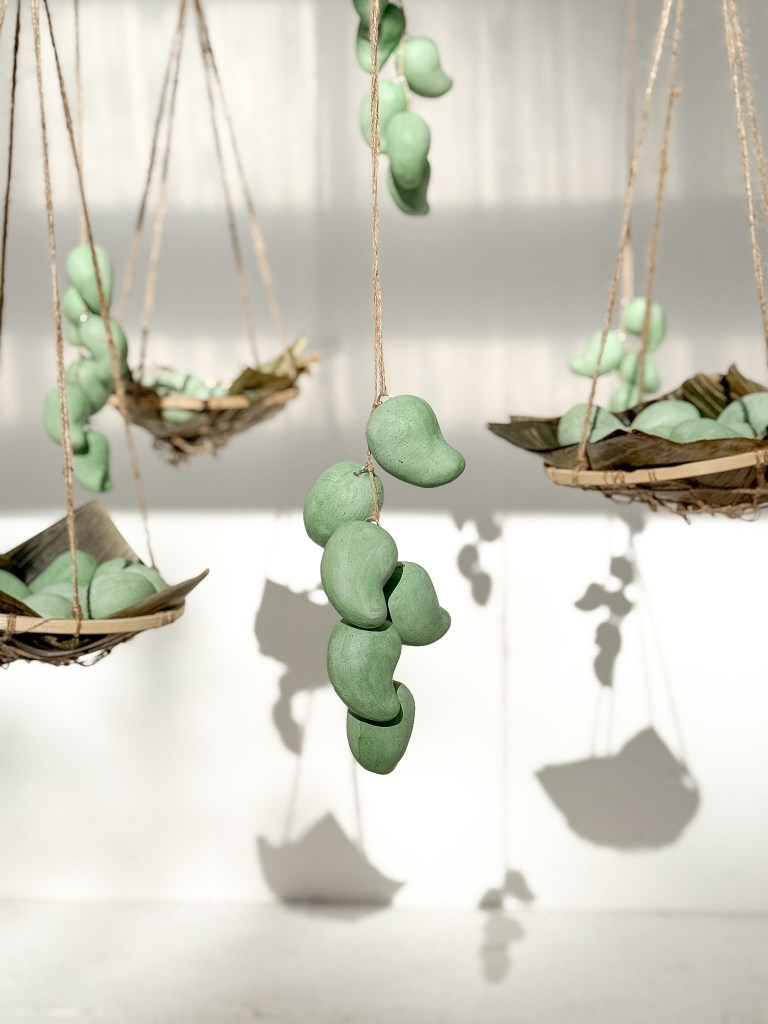
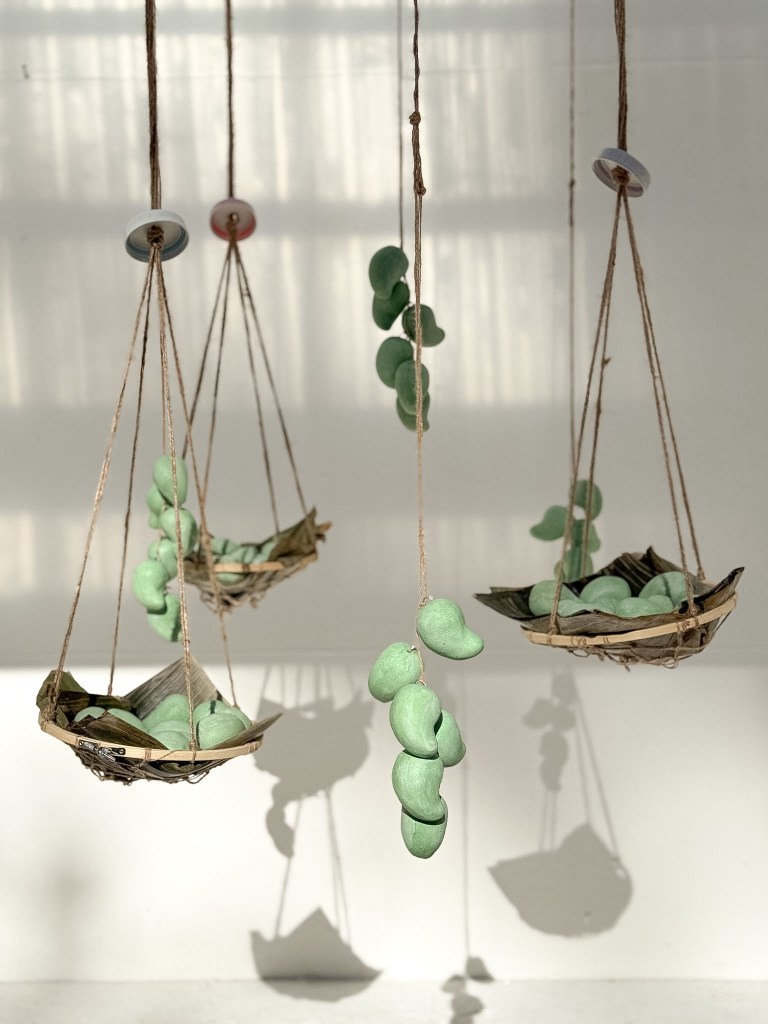
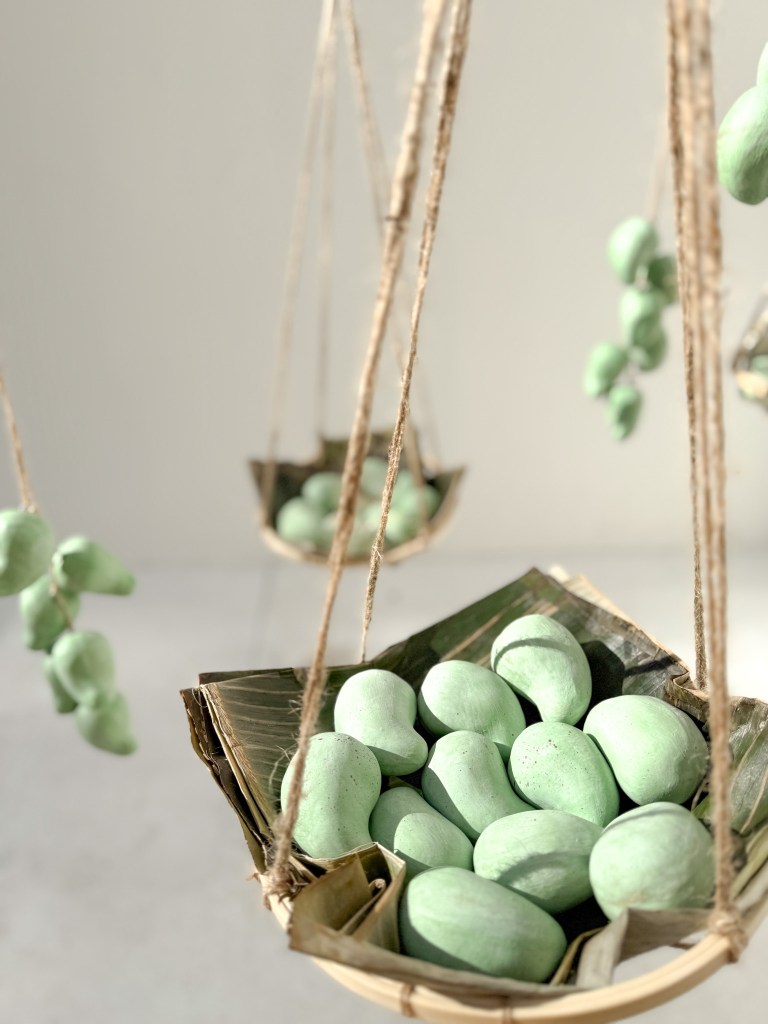
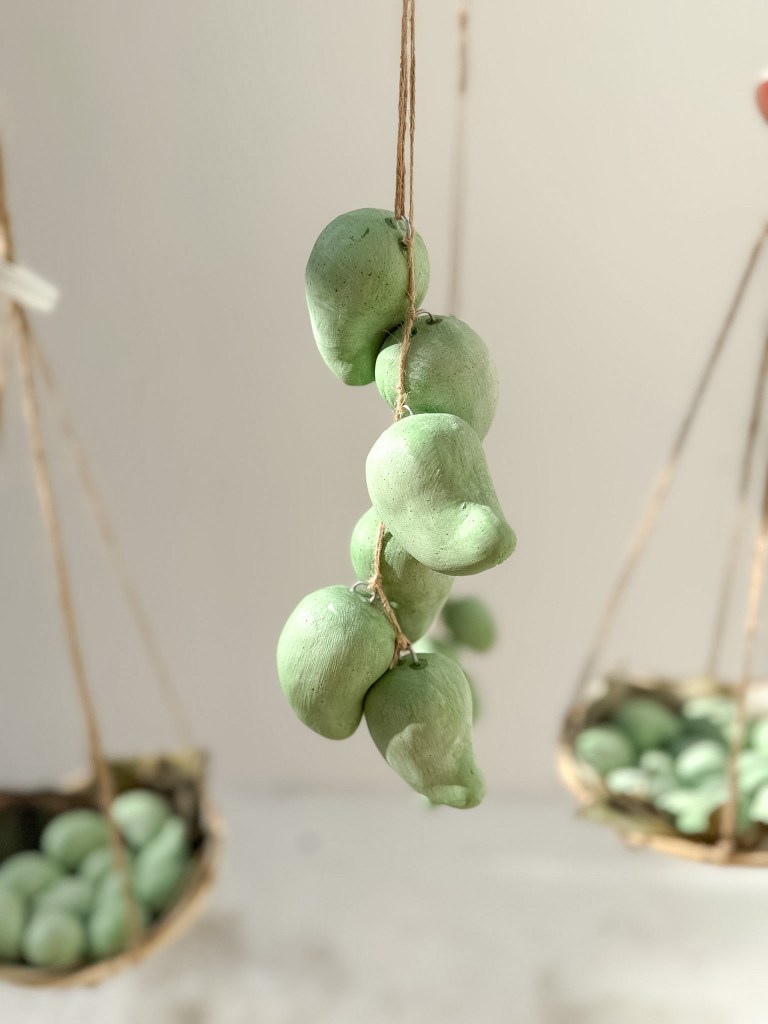
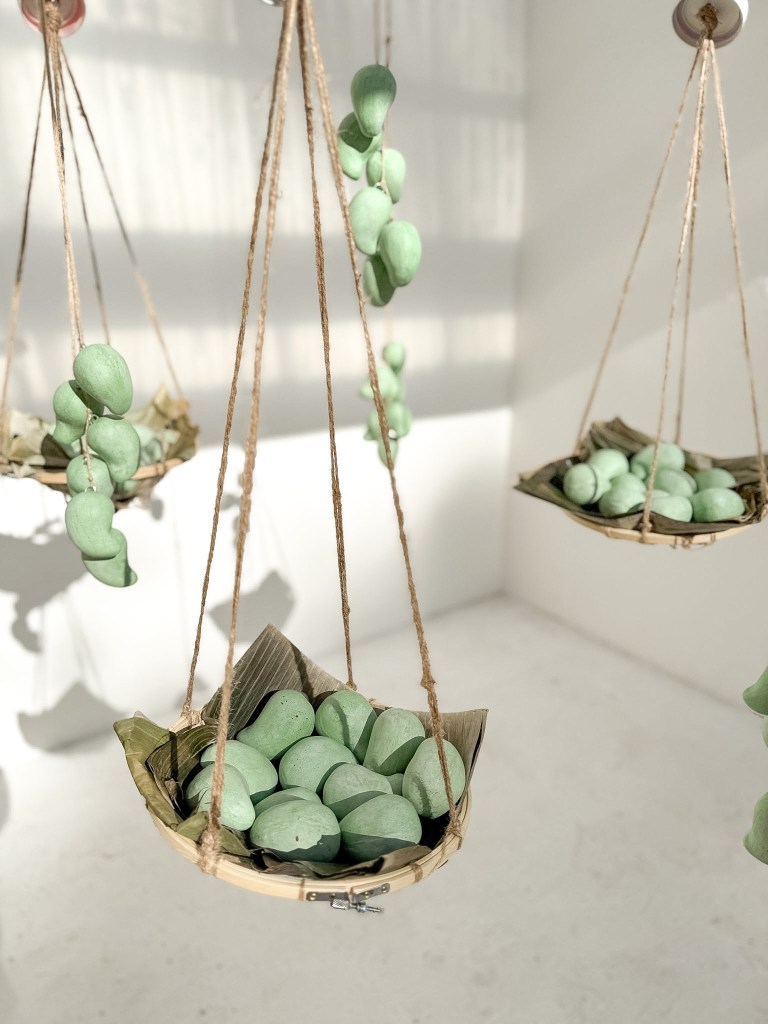
In Mangos del palo en el panteón, I examine the memories that food holds and how we protect these memories. Tapescos are a traditional indigenous practice of storing food and hanging it from the ceiling, which protects your food from pests. I use Tapescos as symbols of protecting what I place inside them. In this installation, I place mangoes on banana leaves, the way they are typically displayed in markets in El Salvador. The placement of the green mangoes inside the Tapesco indicates the protection of my father’s childhood memory. Using Green mango clusters to represent the mango tree and how they grow in clusters. Taking inspiration from the artisanal ceramic mago clusters they sell in El Salvador. Through the use of a dusty matte green, the mangoes reflect a memory from the long past.